Concerns Raised That This Is Just the Beginning of Escalation in Nagorno-Karabakh - Pashinyan
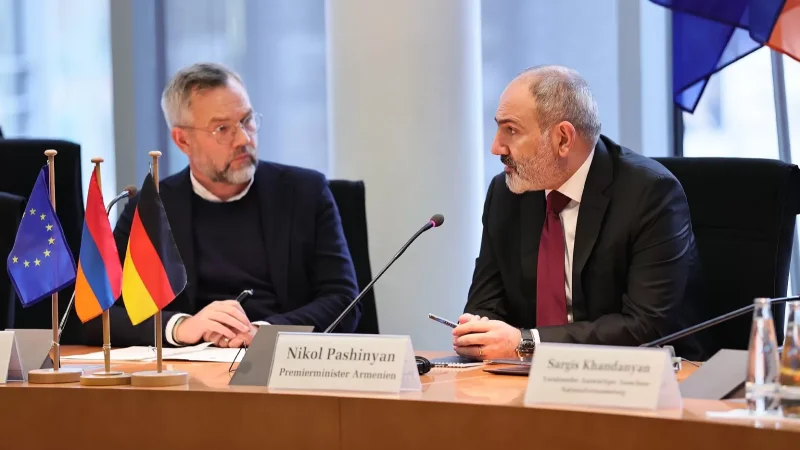
Armenian Prime Minister Nikol Pashinyan's working visit to the Federal Republic of Germany continues. Today, the Prime Minister was hosted by the Bundestag and met with members of the Foreign Relations Committee, led by Chairman Michael Roth. Pashinyan presented the situation in the region.
In his speech, Prime Minister Pashinyan stated: "You emphasized that there is a new factor in our relations with the EU, and that factor is the EU's observation mission along the Armenia-Azerbaijan border. First of all, I would like to thank the EU for making this decision. This decision was the result of the quadrilateral meeting in Prague, when the temporary mission arrived. Since then, we have applied for a long-term mission and are grateful to the EU for making that decision. Overall, the situation remains tense, primarily due to Azerbaijan's continued blockade of the Lachin corridor. Unfortunately, despite the decision of the International Court of Justice, Azerbaijan has still not opened the Lachin corridor. I would like to draw your attention to the fact that the ICJ's decision is legally binding. I believe this is a situation that needs to be discussed at the international level because it is unacceptable to leave the ICJ's decision unaddressed, especially when the humanitarian crisis in Nagorno-Karabakh continues, and there is a need for an international response.
Moreover, what is very important in this context is that the Lachin corridor has been closed for over 80 days now, and during this time Azerbaijan claims that the Lachin corridor is not closed and is open. The ICJ's decision is very important for clarifying this issue since the court stated that the Lachin corridor is closed and must be opened.
During my visit, I heard some opinions that support sending an international observation or fact-finding mission to Nagorno-Karabakh and the Lachin corridor to assess the humanitarian situation and to see what is happening there, as this is a crisis that could lead to irreparable consequences; it could turn into a humanitarian disaster. I believe we must work together to prevent the situation from getting out of control. But the most important question is why Azerbaijan is doing this. We are confident that Azerbaijan's goal is to carry out ethnic cleansing in Nagorno-Karabakh and to remove Armenians from the region. I think the recent statement by Azerbaijani President Aliyev proves this because he stated that the Lachin corridor is open for those Armenians who wish to leave Nagorno-Karabakh, which I believe automatically means that the Lachin corridor is closed for those Armenians who live in Nagorno-Karabakh and want to remain there. This is the fundamental reason for Azerbaijan's actions.
Concerns exist that this is just the beginning of escalation in Nagorno-Karabakh, perhaps also along the Armenia-Azerbaijan border, because Azerbaijan continues to express aggressive thoughts and aggressive rhetoric. You know that last September, Azerbaijan launched a large-scale aggression against Armenia, occupying sovereign territories of Armenia. However, on the other hand, we reached an agreement in Prague, according to which Armenia and Azerbaijan recognize each other's territorial integrity and sovereignty based on the Alma-Ata Declaration of 1991, which means that the administrative borders of the former Soviet states become state borders. The Alma-Ata declaration was about the collapse of the Soviet Union and the creation of the Commonwealth of Independent States. Thirteen former Soviet states agreed that administrative borders would become state borders.
By the way, we also reached an agreement in Prague that the process of delimiting the border between Armenia and Azerbaijan would be based on the same agreement from Alma-Ata. The surprise was that afterward, the Azerbaijani president declared that delimitation should be based on historical maps. You know, it is very difficult to explain what that means. Perhaps the president's new initiative could clarify the situation because recently we witnessed the presentation of the so-called 'Western Azerbaijan' initiative, and the whole idea of that initiative is that the entire territory of the Republic of Armenia belongs to Azerbaijan, and the capital of Armenia is an Azerbaijani city, and so on.
Our assessment is that all of this—the blocking of the Lachin corridor, the so-called 'Western Azerbaijan' initiative—is preparing to launch large-scale aggression against Armenia. Moreover, I would like to draw your attention to another very important situation. Yesterday at the Council of Foreign Relations in Germany, we had a discussion, and some of our colleagues used the term 'Zangezur corridor.' I asked our colleagues to be careful because sometimes the same term can have different meanings in different regions and different political and geopolitical contexts. Usually, in Europe, when people say corridor, they understand routes that provide transportation services of better quality, and so on. But our situation is that we have a legally agreed point regarding the corridor in our trilateral declaration on November 9, 2020, which ended the war in Nagorno-Karabakh.
Thus, there we have only one point regarding the corridor, and that is the Lachin corridor, which is currently blocked. The Lachin corridor was established to connect Armenia and Nagorno-Karabakh. The Lachin corridor is not just a road; it is a security zone that is 5 km wide, and according to the relevant point of the declaration, the Lachin corridor must be outside Azerbaijan's control and must be under the control of Russian peacekeepers. In the same declaration, we have point 9, which is about the opening of all transport and economic routes in our region. And yes, there is a point stipulating that Armenia should ensure communication between the Azerbaijani western regions and the Nakhchivan Autonomous Republic, but there is no point stating that these routes should be outside Armenia's control. That route needs to work in the context of opening the roads and railways in our region. I must note that Armenia is even prepared to open all communications today. But every time we try to do that, Azerbaijan raises a big uproar, saying why they want to open a checkpoint near our borders without coordinating with us.
This is the overall situation, but I think we should focus on a peace agenda. As you know, our government has taken responsibility for the peace agenda, I am personally dedicated to the peace agenda and democracy because I am convinced that democracy and peace go hand in hand, and since democracy is a strategy for us, we are interested in peace so that we can ensure the continuous development of democracy, economy, and freedom in our country. This was an overall assessment of the situation. I will be happy to answer your questions."
Նմանատիպ հոդվածներ
Germany's Chancellor Removes Reference to Artsakh Citizens' Right to Self-Determination
The Principles of Territorial Integrity of Armenia and Azerbaijan as Well as the Self-Determination of Artsakh Citizens are Equal: Scholz
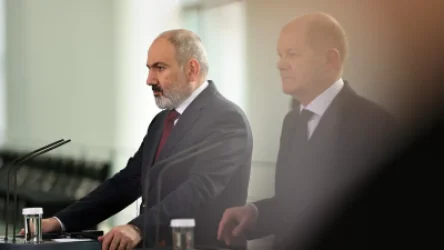
Armenia-EU Agreement, Russia-Ukraine War, Lachin Corridor: Joint Press Conference of Pashinyan and Scholz
Ceasefire Regime Violation Recorded in Askeran Region: Russian Defense Ministry
Ավելին Politics բաժնից
ԲՀԿ-ն վիճարկում է ԿԸՀ-ի որոշումը․ առաջին նիստն ավարտվել է
ԱՄՆ-Իրան համաձայնագիրը կստորագրվի առցանց. ինչ է հայտնի
ՏԵՍԱՆՅՈՒԹ. Մոսկվան ջրի տակ է մնացել անձրևների հետևանքով