Ombudsman Appeals to Constitutional Court to Challenge the Criminalization of Heavy Insults Full of Ambiguous Formulations
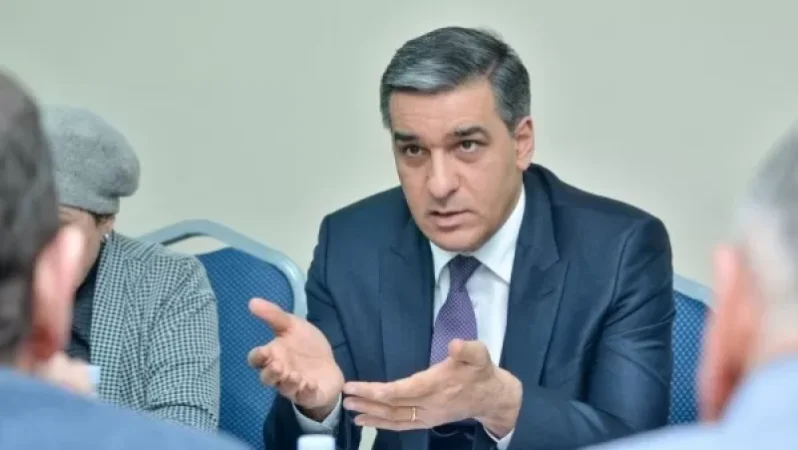
Today, I have appealed to the Constitutional Court to challenge the criminalization of heavy insults full of ambiguous formulations. This was stated by the Ombudsman of Armenia, Arman Tatoyan, on his Facebook page, noting that he presents important details of the application.
“This refers to Article 137.1 of the Criminal Code of Armenia, which classifies insulting a person or humiliating their dignity in other profoundly indecent ways as a heavy insult, and further complicates the article with other parts. This article is full of ambiguous formulations, devoid of legal specificity, and was adopted with gross procedural errors. I must specifically mention that hate speech, any speech directed against dignity, and any statement contradicting freedom of speech is condemnable; such pernicious phenomena should have no place in our society, period!
But this does not mean that the state should immediately start operating with articles from the Criminal Code that are filled with ambiguous formulations instead of pursuing a systematic and planned state policy aimed at regulating this sensitive area. Any measure must be useful and necessary to achieve the legitimate purpose that the state has set for itself.
This article of the Criminal Code has already led to problems, and these problems will only deepen over time, while the declared purpose of the amendment will not be addressed. First, it was unacceptable for this project to be adopted in an extraordinary session of the National Assembly without extensive public and professional meaningful discussions, under the formal justification of not leaving a 'half-finished inheritance for the 8th convocation of the parliament'. The discussions in the National Assembly have only deepened the ambiguities.
In principle, the Government's approach during the legislative phase of this article of the Criminal Code was unacceptable and condemnable. For example, instead of addressing the concerns of several MPs regarding ambiguities, the Government's official representative mentioned that we must rely on practice. Or it is unclear with what confidence it is asserted in the National Assembly that the Prosecutor's Office, investigative bodies, lawyers, and every citizen can distinguish between the threshold of insult and other forms of humiliation.
It is evident that there are no criteria for distinguishing this seemingly threshold, not only for citizens but for the Prosecutor's Office, investigators, and anyone else. The absence of such criteria is confirmed by the discussions on the project in the National Assembly. And the fact that the project was a parliamentary initiative did not mean that the Government should declare from the high podium of the National Assembly that they rely on practice and fail to fulfill their obligation to develop guidelines, conduct training, etc.
This means that both the legislator and the executive have ignored that until judicial practice is established, rapid issues arise for specific individuals and the very bodies handling the cases, which can distort the entire practice. The formulations of the offenses are such that the threshold of the crime has been significantly lowered, as it does not contain any characteristics or basis of crime with which such an action should be manifested.
One cannot move ahead with such approaches and hopes for practice. It must be remembered that this pertains to the rights of real people in real life. It is unacceptable to advance with the presumption that let a few people be subjected to deprivation of liberty or other criminal-law interventions; when drafting and adopting laws, neither the legislative nor the executive body ensured the specificity of practical application, clarity of objectives, or even a meaningful discussion.
The article particularly raises questions regarding the part that sets strict responsibility for heavy insults based on a person's public activity. Such conduct is especially considered to be related to a person's journalistic or editorial activities, fulfillment of official duties, public service, or engagement in public or political activity. But these formulations raise fundamental questions. For example, what exactly constitutes a journalistic activity in today's context, especially regarding video addresses widely disseminated among the public on social networks (e.g., Facebook Live), various public discussions, and other civil or public activities?
Or what is political activity? Is being a member of any political party or associating with a party or participating in 1-2 political actions considered political activity? If yes, then it implies that becoming a party member itself justifies protection for citizens through criminal legal tools and serious (qualitative) criminal provisions. This contradicts the foundations of democracy.
What does public activity entail? This is an absolutely unanswered question. Who qualifies as conducting public activity, considering many people initiate their involvement and regard themselves as public figures? It appears that if a person wishes to receive criminal law protection and especially under aggravating circumstances, then they need to become, for instance, a member of a party or declare themselves a journalist or public figure.
Since apart from the first part of Article 137.1, the remaining parts pertain to prosecutable matters, it turns out that, for the sake of combating offenses punishable under this article of the Criminal Code, the Police must conduct thorough investigations of all posts, publications, and the thousands of comments from users of all kinds of media and social networks such as Facebook, Twitter, YouTube, and more.
All this must also consider the thousands of fake profiles and comments differentiating them from real users. Moreover, it must account for comments from abroad, for instance from the diaspora. In the absence of this, the full application of the law cannot be guaranteed, and therefore, the rule of law cannot be upheld nor can effective measures against crime be implemented. This will render the legislative initiative meaningless and insults and hatred will continue to prevail in our public domain.
But all this raises further questions regarding what capacities law enforcement bodies and courts have for this. For instance, what will the Police or criminal prosecution body do if a citizen writes insults or insults in a foreign language (e.g., in English, Russian, Spanish, or Polish)? How will the Police or any other authority study this entire situation, and more importantly, do they have the professional abilities to interpret insults and humiliate in alternative languages? There are numerous cases where an insult in a foreign language is not interpreted as such in Armenian and vice versa, as the context differs, and more.
If, for example, the Police do not respond adequately to all of the above, then we will be dealing with selective and discriminatory enforcement of Article 137.1 of the Criminal Code; thus we encounter a contextual application of the law. The state itself has engaged in this heavy burden and cannot explain to a segment of people why interventions are made against their rights and not against other individuals who write insults and heavy insults publicly.
This will not be justifiable even by the lack of state resources in concrete cases. Therefore, the state itself is rendering its law enforcement and judicial systems as victims of its own unclear steps, leading to forced discrimination.
It must be remembered that the field of criminal justice is the most risky. It involves arrest, detention, house searches, operational-investigative measures, and more. The application also illustrates, with practical examples, the negative impact of Article 137.1 of the Criminal Code on people’s constitutional rights. Moreover, the short-term application of Article 137.1 of the Criminal Code has already shown that it is logically aimed at protecting officials from citizens. Even in practice, this has started to be perceived in such a way. With this application, I also requested to suspend the operation of Article 137.1 of the Criminal Code until the end of the examination of the case in the Constitutional Court,” Tatoyan wrote.
Նմանատիպ հոդվածներ
Azerbaijan Removes All Mannequins and Helmets from 'Strategist Park' at Armenia's Request

Changes in PCR Testing Requirements for Delayed Second Vaccine Dose
Azerbaijani Armed Forces Shell Armenian Positions Near Martuni with Large-Caliber Mortars: WarGonzo
Map Reveals Location of Military Operations
Ավելին Society բաժնից
Հրդեհը կանխել են. մանրամասներ

Մահացել է գերությունից վերադարձած Կարլեն Ստեփանյանը
Քաղաքացի է որոնվում