May 1992 Operation Was In Line With Military Science, November 2020 Event A Poor Staging: Senor Hasratyan
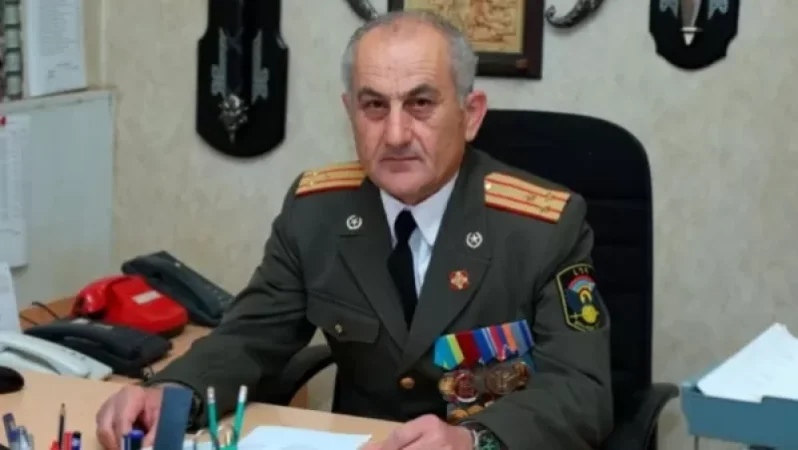
Senor Hasratyan, the former spokesman of the Artsakh Defense Army, has provided details about the 1992 operation for the liberation of Shushi. On his Facebook page, Hasratyan wrote: "According to the plan developed by the staff of the self-defense forces of the Republic of Artsakh, the military operation for the liberation of Shushi began on May 8, 1992, and brilliantly completed on May 9. Nearly 28 years later, the historic Shushi has once again fallen under enemy control. In both cases, combat operations occurred. However, while the operation of May 1992 was well-aligned with the principles and spirit of military science due to its organization and tactical solutions, the actions of November 2020 resembled a poorly staged production... The story of the latter will still be discussed, while those interested can familiarize themselves with the developments of the 29-year-old military operation in the presented overview.
THE LIBERATION OF SHUSHI... From the very first days of the Artsakh national liberation movement, Shushi became the main center for the expansion of anti-Armenian actions. Initially, it served as a political administrative base for uniting and directing the Azerbaijani population in Artsakh, but in the phase of open armed confrontation, it turned into a powerful military stronghold. This was especially felt on September 25, 1991, when for the first time, the city of Stepanakert and surrounding Armenian settlements were subjected to mass shelling from the "Alazan" type rocket artillery systems located in Shushi, and that continued with increasing frequency thereafter. This unprecedented action soon became 'contagious' for other Azerbaijani military strongholds positioned in Artsakh. From November 1991 until early May 1992, Stepanakert was targeted with about 4700 shells fired from Shushi, Janhasan, Kyosalar, and Ghaibalus, of which around 3000 were from "Grad" systems. As a result of the bombardments, 111 civilians were killed, and 332 were injured, while 370 residential homes and buildings were destroyed...
According to data from the Azerbaijani Armed Forces' General Staff directive No. 141 dated April 24, 1992, on the days preceding the operation, the following forces were concentrated in the city: the "Territorial", "Karabakh", People's Front, the 872nd self-defense detachment of Eyvla, the special-purpose unit No. 777, the "Sabail" tank unit, an artillery division, a motor vehicle battalion, and other combat support units. The total number of military personnel was around 1700. This source also indicated a sufficient amount of military equipment and weapons in Shushi, including 4 tanks, 9 infantry fighting vehicles, 4 armored personnel carriers, 2 "Grad" rocket artillery systems, 8 units of 100mm guns, 20 units of 82mm mortars, and a significant amount of ammunition...
It should be emphasized that these facts are also referenced one by one without any difference by the former Azerbaijani Defense Minister Rahim Gaziyev, who is accused of state treason. Moreover, in a confession made in May 2005 to an Azerbaijani media outlet, he revealed: "...I ordered to open fire on Stepanakert from the 'Grad' systems. Our soldiers could not accurately shoot according to the coordinates. Four systems (the command directive and Gaziyev's previous testimony refer to 2 systems) were out of order. The soldier had to climb the side tower and observe the targeting from there... After the next shot, he suddenly shouted that the rocket had fallen in the area of the 366th regiment. We learned that as a result of the bombardments, 5 infantry fighting vehicles were put out of action...
Such Azerbaijani testimonies regarding the artillery assault on Stepanakert and surrounding Armenian settlements are numerous and, interestingly, complementary to each other. In this respect, a segment from the phone conversation between the commander of Shushi's defense, Elbrus Orujov, and Rahim Gaziyev at the beginning of May 1992 is significant, where they discussed not just shelling, but carrying out an assault on Stepanakert, presenting it as a 'preventive strike': "On the evening of that same day (May 6), Rahim Gaziyev received my report about the situation around Shushi and my proposal to attack Shushi..." said E. Orujov. Hearing the field commander's proposal, the Minister of Defense chose to respond ambiguously, literally saying: 'Be careful, as Yagub Mamedov is negotiating with Levon Ter-Petrosyan in Tehran. I fully place the responsibility for the defense of Shushi on you. Act according to the unfolding situation.' Assigning such authority to a self-confident commander meant giving him unlimited freedom of action. Meanwhile, as noted above, there was sufficient military capacity available in Shushi for 'free action'...
On May 7, Azerbaijani infantry and armored vehicles launched offensive actions towards the southwestern defensive positions of Stepanakert, with the support of 3 MI-24 combat helicopters. On the same day, around 200 rockets and various other shells were launched from the heights of Shushi and Janhasan towards the capital. As a result of the shelling, 4 civilians were killed, and another 4 were injured, a fire broke out at the railway station and in dozens of residential buildings in the city. During this time, reconnaissance by the self-defense forces of Artsakh revealed that the opponent was intensively transitioning supporting forces and resources from the Gubadlu-Lachin-Shushi road to the combat zone... To prevent the adversary's preemptive actions and accordingly ensure the safety of Stepanakert and surrounding Armenian settlements, the self-defense forces had no choice but to take decisive measures. On the evening of May 7, halting the enemy’s advancement towards the southwestern direction of Stepanakert, the next morning, the Armenian units went on the offensive in four striking directions...
According to the directions, participating in the operation were: - Northern (commanded by Valeri Chitchyan): 4th, 5th, 6th, 7th, 8th, 9th companies, the reconnaissance company, and the "Sevan" (Suriki), Hrazdan (Sasuni), Stepanaorg (Hrach) detachments. - Eastern (commanded by Arkadi Karapetyan): 1st company, "Shoshi", "Dashusheni", "Krasnuyu", "Agoy", "Ruslan", "Dashnaks", "Most" detachments. - Southern (commanded by Samvel Babayan): 2nd and 3rd companies, "Berdadzori", "Avetaranotsi", "Sxnakhi", "Aknaghbyuri", "Karintaki", "Dashnaks" (Zhivair Seferian's) detachments, "Kirs" group. - Northwestern (commanded by Seyran Ohanyan): "Badara", "Kumayri", "Baluj", "Hrant", "Vaghu", "Aramo", "Arabo" detachments, one group from DH. The overall commander of the military operation was Arkadi Ter-Tadevosyan, and the chief of staff was Felix Gzoyan...
According to the combat decision, the Armenian forces, with personnel numbering up to 1200 (against the enemy's approximately 2500, of which 1700 were in Shushi, 300 in Kyosalar-Karayav, and 500 in the direction of Lachin), 4 tanks (against 8, of which 4 were in Shushi, 2 in Kyosalar-Karayav, 2 in the Lachin direction), 16 armored vehicles and other armored vehicles (against 25, of which 13 were in Shushi, 7 in Kyosalar-Karayav, 5 in the Lachin direction), 4 artillery units (against 12, of which 8 were in Shushi, 4 in Kyosalar-Karayav), and 6 mortars (against 36, of which 20 were in Shushi, 6 in Kyosalar-Karayav, 10 in the Lachin direction), and 4 rocket artillery units (against 5, of which 2 were in Shushi, 1 in Kyosalar-Karayav, 2 in the Lachin direction), as well as 27 grenade launchers (against 50, of which 30 were in Shushi, 5 in Kyosalar-Karayav, 15 in the Lachin direction) had to go on the offensive simultaneously across all directions along a front stretching about 40 kilometers: Kyosalar-Shushi-Musunmanlar. Despite the average ratio of forces and resources across the front line being 1:2.6 in favor of the opponent, nonetheless, the command of the Artsakh self-defense forces, focusing on the qualitative factor of action organization, issued a classified order on the night of May 7-8 to quietly move the units to the starting positions according to the directions. At around 2:00 AM on May 8, the operational leadership occupied a command post located about 500m northeast of the village of Shosh. Forty minutes later, the commanders of the directions reported readiness for mission execution. At 2:50 AM, the order to commence artillery preparation was given. Main targeted strikes were made towards the city of Shushi, aimed at suppressing the fire points located at the military base, which were unleashing a barrage upon Stepanakert, while also creating favorable conditions for the advancement of the self-defense forces. Overall, the Armenian artillery launched 240 rockets toward Shushi. Regarding adjacent directions, exclusively "Alazan" type rocket artillery, "D-30", "KS-19" guns, and mortars were used during the artillery preparation...
Following a successful execution of the artillery preparation, the Artsakh self-defense forces, in accordance with previously established combat decisions, launched their attack in four directions: In the morning of May 8, fierce battles broke out along the entire front line stretching from Janhasan to Kirs. Although resistance was demonstrated by the enemy in certain sections of the frontline, thanks to the clear command of the self-defense forces and decisive actions of the subordinate units, within hours, the enemy was driven back from its positions near the city and began its retreat whilst suffering losses. By noon, the defense of Shushi was breached from the north and east, and by 6:00 PM, the city center was under the control of the Armenian forces. Events were also developing favorably for the Armenian forces operating at the flanks. The detachments deployed towards Mount Kirs made advances towards Lisagor, capturing one of the strategically significant heights near the village and took control of the Shushi-Lachin highway. Panic began among the Azerbaijani forces, which found themselves in a blockade. On one hand, the confronting strikes, and on the other, the threat of encirclement rendered the enemy forces uncontrollable. To prevent the disorganized retreat of their demoralized soldiers, the Azerbaijani command deployed air support. Around noon, one Azerbaijani military plane and one helicopter bombarded the self-defense forces located in Shushi. Additionally, the adversary transitioned to large-scale offensive actions from the positions in Aghdam to divert the attention of the Armenian side on the battlefield. At around 3:00 PM on May 8, Azerbaijani helicopters penetrated the airspace of Artsakh, bombarding the villages of Avdur, Myurishen, Norshen in the Martuni region and the villages of Shosh and Krasni in the Askeran region. Simultaneously, intense battles unfolded in the border area from the Norashen village towards the Gylaply settlement of the Aghdam region. Engaging in unequal combat against significantly larger enemy forces supported by armored vehicles, the Armenian self-defense forces were able to force the adversary to abandon their plans for further actions and they retreated to their original positions whilst sustaining losses (9 killed, dozens injured, and 1 armored vehicle disabled)...
On the same day, around 6:00 PM, Azerbaijani armed formations stationed in the Fizuli region launched an attack on the defensive positions in the village of Tog. However, here too, the adversary received a fitting counterattack and was repelled. By late evening on May 8, the skies over Shushi gradually calmed. In the pervasive silence, the only sounds heard from different corners of the city were intermittent automatic gunfire. By the morning of May 9, the historic fortress city of the Armenians was fully under the control of the self-defense forces...
The organized progression and brilliant conclusion of the military operation for Shushi demonstrated that the newly formed Artsakh self-defense forces were capable of opposing an opponent whose numerical and technical military capabilities vastly surpassed their own through their willpower and determination, employing tactically astute methods in accordance with the principles and spirit of military science to accomplish seemingly impossible tasks. During the operation, the Armenian side suffered 47 casualties, 68 injuries, 2 missing, 1 unit of T-72 tank, and 1 unit of infantry fighting vehicle (BMP-1). The losses suffered by the enemy were incomparably greater: both in Shushi itself and in the adjacent combat theater, the Azerbaijani army lost numerous personnel, around 10 vehicles, as well as various types of artillery, alongside a significant amount of ammunition, shells, and other weapons.
Նմանատիպ հոդվածներ
Ավելին Society բաժնից

Այսօր երեկոյան երկնքում ուշագրավ երևույթ կլինի

ՊՆ-ն չի կարող բնակարանից վտարել արցախցի զինծառայողին. փաստաբան

Հայաստանը կարող է բախվել միգրացիոն լուրջ ճգնաժամի. ԱՊՀ-ից զգուշացնում են