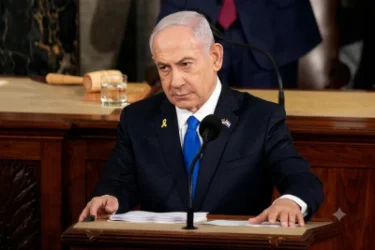
VIDEO: Prime Minister Delivers Message on National Security Strategy
Prime Minister Nikol Pashinyan is leading a session of the Security Council in Yerevan. Among other issues, the meeting discusses the approval of the National Security Strategy. In this context, Prime Minister Pashinyan delivered a message, stating in particular:
“Esteemed President of the National Assembly, honorable members of the Security Council,
Today, the agenda of the Security Council includes extremely important issues, but I want to emphasize one of them—the question of approving the National Security Strategy. Of course, I believe we have received quite a good draft, but I want to underline that here, not only the text itself is important, but also the context. When looking at our national security issue, I believe we must first examine our national identity issue, because national security is about the preservation of national identity and its protection from physical and substantive threats. However, on the other hand, national identity does not remain the same. Our nation, our people have existed for millennia, but being Armenian has not meant the same thing throughout all these millennia, and the significance of the concept has changed over time due to different circumstances, events, and factors.
We do not know what our compatriot during the time of King Artashes meant when they referred to an Armenian. But we surely know that it does not mean the same thing that we mean today when we say ‘Armenian.’ At the very least, they did not know about our existence, while we certainly know about theirs. This circumstance alone is a significant factor in the development of national identity.
We do not know whether the Armenian who lived 2000 years ago viewed their actions from the perspective of our interests today; we do not know if there was a similar line of thought at that time. But now we can act this way—knowing the past, thinking not only about the present and future but also about a millennial horizon. And perhaps this is the turning point where national ideology becomes a matter of vital necessity, an applicable institution, when there is a problem of formulating not only today’s actions based on the experience of the past and present but also our message directed at the future, which must connect the Armenian living a thousand years from now with the Armenian living a thousand years ago.
Perhaps this is how the process of developing national identity and consciousness works. National identity develops through the experiences brought by its own history, through the knowledge of that experience, and through the positive and negative impressions received during this experience and life, as well as aspirations for the future, which is organically linked to the past and the present.
Over the years, our national identity has developed to the extent that today we can articulate our goals: to ensure the existence and normal development of our generations on this planet in the territory of the Armenian state, and to view our current actions from that perspective as well.
In 2000 years, the Armenian living on this earth will not be the same as we are today, just as we are not like the Armenians who lived 2000 years ago. But unlike the Armenians who lived 2000 years ago, we can send a message to the Armenians who will live 2000 years later. And the main meaning of that message should be what connects them to us and to the Armenians who lived 2000 years ago, and what conditions should strengthen and vitalize that connection. On the other hand, that connection should not be a chain. It should not pull us back; rather, it should push us forward, stimulate, inspire, and should not become an oppressive presence. Instead, it should provide each Armenian with the opportunity to feel part of a thousand-year mission, to become part of that mission, to expand the framework of that mission, and enrich its content. It should bring confidence, aspiration, and a keen interest in self-recognition and self-awareness.
The most fundamental component of national identity is the connection to one’s roots and the proprietary feeling towards the legacy and values formed throughout the nation’s history. This should strengthen each individual’s faith in their own abilities, thus also the nation’s faith and confidence in its own strength. This is why I find it necessary to outline such a trajectory in the preamble of the National Security Strategy, which is articulated as follows:
Moreover, I have chosen the famous lines of Vahan Teryan for this message:
“Babylon was our enemy – see it has disappeared like an evil mist.”
And thus, we have loved in the Armenian highlands, descendant of Hayk the Forefather, and our name is Armenian. We are the descendants of the Kingdom of Van, the dynasty of Ervandunians, the dynasty of Artaxias, the dynasty of Arshakuni, the dynasty of Bagratuni, the Kingdom of Cilicia, and the First Republic of Armenia. We recognize the unique role of the Armenian SSR in the development of education, science, culture, and industry in Armenia. We are proud citizens of the Third Republic of Armenia, the children of the Armenian people who founded the Third Republic and liberated Artsakh. The Republic of Armenia is the guarantor of the safety and freedom of the Armenian people of Artsakh. The Republic of Armenia is a pan-Armenian state representing all Armenians worldwide.
The Armenian people have gained the strength and capability to overcome many historical calamities and reach the 21st century thanks to the skills, knowledge, and characteristics developed during the period of statehood. Based on this historical consciousness, the Armenian people managed to re-establish their independent state immediately after the Great Genocide.
The Armenian state is the only guarantee of the existence and development of the Armenian people. Consequently, the Armenian state must exist forever because the Armenian people must exist forever.
National Values
The national values of the Armenian people are:
- The statehood of Armenia, the citizenship of the Republic of Armenia.
- The history, folklore, epic, beliefs, legends, fables of the Armenian people.
- The Armenian language and writings, Armenian literature, including translated literature, knowledge, and science.
- The pan-Armenian potential, the Armenian diaspora.
- The homeland, family, and individual.
- The Armenian Apostolic Holy Church, the Armenian Catholic Church, the Armenian Evangelical Church, Christianity.
- Armenian popular and classical music, Armenian dance art, Armenian fine arts, and Armenian architecture.
- Authorial and Armenian fine art.
- The homeland’s natural environment with its biodiversity.
- Progress, freedom, self-esteem, hospitality, love for education, hard work, commitment to the law, respect, and tolerance towards other peoples, nations, and religions.
- Fraternal feelings and relations towards national minorities living in Armenia and Artsakh and the inseparable unity with them expressed through the citizenship of the Republic of Armenia and Artsakh.
- The Armenian cuisine, the material and immaterial heritage exemplifying, representing, describing, or symbolizing the national values of the Armenian people described above.
National Goals
The national goals of the Armenian people are:
- Ensuring the ideological, security, social, political, legal, economic, demographic, international, educational, intellectual, and cultural institutional conditions necessary for the eternity of the Armenian state.
- International recognition of the right to self-determination of Artsakh without any restrictions.
- International recognition of the Armenian Genocide, overcoming and eliminating its consequences.
- Ensuring and protecting the security, welfare, freedom, happiness, and other well-known rights of the citizens of the Republic of Armenia.
- Equality before the law, equality of rights for women and men, ensuring equal opportunities for women and men to participate in public, state, and economic life, establishing national unity based on the protection of rights and the fulfillment of duties.
- Preserving and developing the national-state identity, independence, and sovereignty of the Armenian people, including the restoration and development of national identity among the diaspora and the increase of the level of knowledge of the Armenian language and the number of citizens of the Republic of Armenia.
- Consolidation of the pan-Armenian potential around the implementation of national goals for the preservation and development of national values.
Rules of Coexistence for All Armenians
- Violence should be excluded from the toolkit for solving any internal Armenian issues. All forces and individuals who view violence as a means of solving any internal Armenian issues should be rejected. The vision of a society free from violence, a people free from violence must become a cornerstone of our nationwide unity. This does not apply to the use of legal force for the prevention and disclosure of crimes, ensuring the normal life of society, as well as protecting the homeland from external aggression.
- The people and their free expression of will are the only source of power formation. Any attempt to distort or distort the free will of the people must be regarded as anti-state, anti-national activity.
- The sovereignty of Armenia and Artsakh, and that of the Armenian people, is of the highest value. Forces ready to engage foreign influence in resolving internal Armenian issues or act as representatives of foreign interests in our country should face fierce opposition from the Armenian people and the legitimate representatives of the Armenian government.
- Armenia and Artsakh must be free from corruption. All manifestations of corruption, including patronage, artificial monopolies, and creating artificial barriers against competitors must be eradicated, and the material damage caused to the state and people due to corrupt activities must be compensated.
- The supremacy of law and justice, equality before the law, protection of rights, and fulfillment of duties must become the cornerstone of inter-ethnic relations. The existence of courts subject to external or internal influences poses a threat to national security. Courts must be independent. The presence of privileged classes, circles, or individuals in any sector of the economy, politics, and social life must be excluded.
- The goal of the negotiation process for resolving the Artsakh issue must be to protect the results of the Artsakh liberation war fought for the self-determination and security of the Artsakh people. Any solution deemed acceptable to the governments of Armenia and Artsakh as a result of negotiations can only be considered acceptable if it has popular approval in Armenia and Artsakh.
We and the World
Throughout its history, Armenia has found itself at the crossroads of ‘the East’s West’ and ‘the West’s East,’ often becoming the scene of clashes between civilizations. We reject the hypothesis of the clash of civilizations and position ourselves in international relations as advocates of dialogue between civilizations. International and interethnic dialogue is our key vision in external relations—based on a desire for mutual respect, understanding, and becoming understandable. Facilitating the dialogue between civilizations, nations, and states, as well as multilateral relations, should express our commitment to supporting global peace and stability. Armenia is prepared to become a platform for such dialogue.
This concludes the message. Addressing the text of the National Security Strategy that we will adopt today, I would like to emphasize one more important nuance. This nuance is that in the strategy, the source and guarantee of the existence of the state of Armenia is considered the will of the Armenian people, meaning the existence of the Republic of Armenia is conditional upon, determined by, and must be conditioned by the will of the Armenian people. And if we were to formulize concretely what we mean by saying the will of the Armenian people, and how that will should be expressed in everyday situations, my perception is that the will emerges at the intersection of the implementation of rights and obligations, when the citizens of the Republic of Armenia, the Armenian people as a whole, have the opportunity to exercise their rights—while at the same time being equally diligent in fulfilling their obligations—and it is at the point where these two concepts intersect that the will emerges on which the Armenian state can genuinely rely.
This is a crucial distinctive feature, and I consider it essential to emphasize in the text and concept of the National Security Strategy because, as we have had several occasions to say in the past, the existence of the Armenian state and, unfortunately, its later non-existence has often been conditioned by the favorable or unfavorable geopolitical circumstances in the course of our history. And our great challenge is to bring the fate of our people and state out of this cycle, where geopolitical factors become the key aspects determining our state’s existence or non-existence, and our state should be based on the will of our people.
And essentially, with this National Security Strategy, we are setting a new bar for ourselves. But I want to say that it is not so much a bar; it is more appropriate to call it a heavy bar because it places a certain but, of course, commensurate and equivalent responsibility on each of us—starting with high-ranking officials and continuing with citizens—on us as a whole, and that the existence of our state depends on our willingness to bear this responsibility and exercise our rights. I am confident that we, as a people, as a nation, are truly ready to take on this responsibility today. I am pleased that we have the opportunity, as a government, as the Security Council, to articulate this readiness and that we have the mandate from our people to articulate this readiness and make the implementation of that readiness our daily work.
Thank you. This is the preamble.”
Նմանատիպ հոդվածներ

Ավելին Politics բաժնից
Հայկական երկու ընկերություն հայտնվել են ռուսական պատժամիջոցների տակ
Բուրկինա Ֆասոն խզեց դիվանագիտական հարաբերությունները Ֆրանսիայի հետ
Իրանը հուսահատորեն ցանկանում է համաձայնագիր. Թրամփ