3 Tons of Jewelry Semi-Finished Products Exported from Armenia to Russia: Questionable Figures
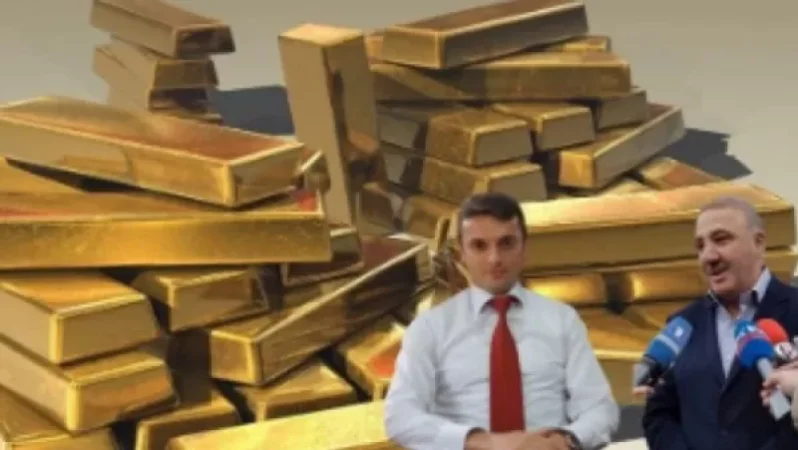
In 2019, approximately 3 tons of jewelry semi-finished products were exported from Armenia to Russia at the price of $29 per gram. This gold is neither exported in the form of doré alloys, nor are the items considered jewelry. According to the databases of the Armenian Customs Service, this is the first instance of such a value of jewelry semi-finished products being exported from Armenia.
For months, together with our Russian partner (Denis Lebedev, fontanka.ru, St. Petersburg), we worked to uncover the origin of this product and the exporter, which the Armenian Customs Service was persistently trying to keep confidential. However, we managed to find the exporter, who assures that the exported items are recycled gold purchased from banks. This information was reported by Hetq.
We learned about the export of this quantity of jewelry semi-finished products through a series of inquiries based on the publicly available data of the Customs Service. The received responses complete this hidden narrative.
Questionable Surge
A significant spike in the statistics of Armenia's 2019 exports has appeared among higher customs value products under the category of “scrap and waste of precious metals or metal coated with precious metals.” The commodity identifier code for this group is 7112. According to the data from the Armenian Customs Service, 163 tons of goods were exported under this code in 2019, with a total customs value of approximately $88 million. Compared to 2018, export volumes increased 2.1 times, and the customs value surged 8.9 times.
In the list of the highest customs value products exported from Armenia, code 7112 ranks seventh. Notably, in previous years, exports under this category had relatively small volumes. In some years, such as 2017, the quantities were noticeable, but the customs values were quite small, leading to the suspicion that a certain amount of waste and scrap was exported, consisting of a minor quantity of precious metals.
However, in the 2019 data, apart from the fact that such a surge is already attracting attention—especially in terms of value—the material becomes even more intriguing when attempting to determine what product is being discussed and to which countries it has been shipped.
In response to our inquiry, the State Revenue Committee initially stated that mainly waste and scrap of electronic boards, catalytic converters, and radio-electronic elements containing precious metals were exported. There was no mention of jewelry semi-finished products in the response from the SRC.
Subsequently, by analyzing the export data, we found that quite different levels of products were exported under this code. Specifically, large quantities of low-cost precious metal-containing waste and scrap were exported to EU countries such as Germany, Latvia, Lithuania, etc., totaling 160 tons valued at $1.2 million. This means that 1 kilogram was exported at around $8.
At the same time, substantially expensive products were exported to Russia under the same code, with a gram valued at $29.
About 3 Tons of Jewelry Semi-Finished Products to Russia
The most intriguing part of this story starts with the statistics from Russia. As noted, a considerably expensive item of this product group was exported from Armenia to Russia. Specifically, about 3 tons (2997.1 kg) were exported, with a total customs value of $86.7 million. This suggests that one gram was exported for $29.
Given the low likelihood that such a high value could be attributed to the above-mentioned products, such as scrap from electronic boards, catalytic converters, and other parts, we sent additional inquiries to the SRC.
This time, the SRC responded that jewelry semi-finished products were indeed exported from Armenia to Russia under this product group. However, it did not specify how much of the items constituted gold or other precious metals. Just the price (29 dollars per gram) indicates that they pertain to high-value items.
Incidentally, we conducted a comparison of numerical data between the Armenian and Russian customs services. These mainly align with minor discrepancies, which is natural as the exporting country calculates its value with a different methodology (using FOB prices), while the importing country uses another (using CIF prices).
However, when we attempted to find the product data for this code in the databases of the Eurasian Economic Commission, we discovered that this code is completely absent from their published list of mutual trade among EAEU countries for 2019. Products starting with code 70 are followed immediately by those starting with code 72. Code 71 is omitted entirely.
According to the Russian Customs Service data, the export of jewelry semi-finished products from Armenia continued in January-February of this year.
In 2019, according to the SRC, one company exported jewelry semi-finished products from Armenia to Russia. Citing Article 60, Section 3 of the Law on Customs Regulation of the Republic of Armenia, the SRC does not disclose the name of that company.
The SRC provided a general list of companies that conducted exports under the 7112 code, which includes six companies. However, as mentioned above, the SRC does not disclose which specific company has conducted the export to Russia. If one or two of them are relatively well-known companies, the others are mainly newly established with little recognition.
The Ministry of Economy Unable to Clarify
We also approached the Ministry of Economy for details regarding the export of the 3 tons of jewelry semi-finished products. We relayed the Customs Service data to the advisor to the Minister, Gagik Mkrtchyan, requesting clarification on where the batch originated from, whether there are risks of legal violations, and which company exported it.
Days later, Gagik Mkrtchyan informed us that the ministry could not assist in any way, as the State Revenue Committee does not provide them with information regarding the exporter. It is reiterated that this is a trade secret.
This results in a situation where an unprecedented quantity of highly valued products is being exported from the country, the origin of which may appear at least questionable, yet the Ministry of Economy is unable to clarify what is happening because the SRC does not permit it.
The Exporter is a Company Owned by Haybusinessbank Owners
Nevertheless, we managed to determine that the exporter is “Golden Heritage” LLC, “Center” branch AS (a separate subdivision), which was registered in November 2018 according to the State Register of Legal Entities of Armenia. It is a branch of “Golden Heritage” LLC, which is registered in Artsakh. The State Register Agency of the NKR informed us that the owner of “Golden Heritage” LLC is “GM Holding” LLC, owned by Arsen Seyrani Mikayelyan (45%) and Vitali Grigoryants (55%). Arsen Mikayelyan has been the chairman of the board of Haybusinessbank since 2019 and owns 5% of the bank’s shares. The remaining shares of the bank belong to well-known businessman Vitali Grigoryants, who resides in Russia. Arsen Mikayelyan is one of his close associates. He is also the director of the Vitali Grigoryants Charity Foundation.
The director of “Golden Heritage” company, Armen Galstyan, confirmed in a conversation with Hetq that their company exported jewelry semi-finished products from Armenia to Russia last year. When we inquired about the source of such a quantity of jewelry semi-finished products and whether he could elaborate on what exactly these semi-finished products are, the company’s director requested that we send our questions in writing. According to him, this information contains trade secrets, thus he cannot guarantee that they will respond to those questions.
However, one day after sending the inquiry, we received a response. Armen Galstyan mentioned that the exported items are recycled bank gold. “Standardized ingots of gold are brought from commercial banks, which are exported to the EAEU country of Russia after processing, according to agreements with partners,” it is stated in the response.
Through additional phone calls, we tried to understand where this amount of gold was processed, which banks it was purchased from. However, Armen Galstyan did not answer these questions, only indicating that they operate within legal parameters. Here arises the question of how it was exported at such a high price if, after processing, it turned into scrap and waste precious metal.
To provide context, gold exported in doré alloy form was exported in 2019 at an average price of $38.4 per gram and under a completely different code. Over the past two years, up to 6 tons of gold (including platinum) has been exported from Armenia annually. It is exported in doré alloy form, part of which is silver. Exported primarily by Geopromining Gold LLC, which operates Armenia's largest gold mine, Sotk.
According to the Armenian Customs Service, in 2019, Armenia exported 5.8 tons of gold, with a customs value of $224 million. It is noteworthy that the average price for one gram of gold exported was $38.4. Compared to 2018, the export volume increased by 818 kg or 16%, while the customs budget increased by $48 million or 27%. Gold is mostly exported from Armenia to Switzerland, with some also going to Italy. This is entirely unrelated to the semi-finished products discussed in this article, as they are exported under a completely different code.
In 2019, 2.5 tons of goods were imported into Armenia under the gold code, valued at $114.5 million. In 2018, about 1.8 tons were imported, valued at $73 million. Gold is primarily imported into Armenia by banks and companies operating in the jewelry sector that process this gold into jewelry products. The gold imported and exported by our country differ qualitatively; the exported gold is not extensively processed. If “Golden Heritage” claims that gold was purchased from banks, it is most likely that the gold held by banks is the imported gold, which averaged $45.6 per gram in 2019.
Considering that Armenia often becomes a transit country for the transportation of various goods from one country to another, there were suspicions that the aforementioned 3 tons of jewelry semi-finished products might have been imported and subsequently exported from Armenia. However, according to the customs service’s data, such priced products were not imported into Armenia. Specifically, in 2019, 32.3 tons of goods were imported under code 7112, worth about $186,000. The price per kilogram was around $6. Thus, this cannot be jewelry semi-finished products, as it would calculate to just $0.006 per gram. No imports occurred at all in 2018.
Another category we examined is jewelry items. This category is also exported and imported under a separate code. In 2019, according to data from the customs service, about 8 tons of jewelry worth approximately $19 million were imported into Armenia (4.3 tons for $17 million in 2018). The imports primarily came from Italy, the United Arab Emirates, Thailand, and Turkey.
Meanwhile, Armenia exported 86.6 tons of jewelry valued at around $43 million (in 2018, 52.38 tons were exported for $40 million). Armenia exports jewelry to Russia, the UAE, Turkmenistan, the United States, and others.
Thus, there remain quite unexplained questions in the data regarding the export of 3 tons of jewelry semi-finished products from Armenia. The exporter claims that it is recycled gold purchased from banks. Meanwhile, it is exported not under the gold or jewelry identifying code but rather as waste-scrap of precious metals. The State Revenue Committee, representing the Customs Service, is obliged to clarify this issue.
Նմանատիպ հոդվածներ
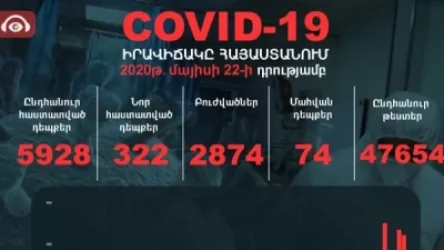
322 New Coronavirus Cases and 4 Deaths Registered in Armenia

316 in serious condition, 53 in critical condition: 17 connected to ventilators, Torosyán
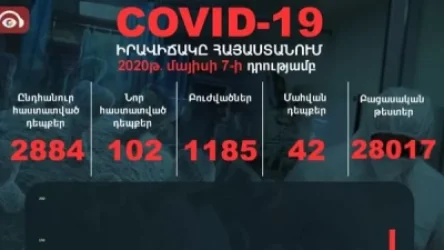
102 New Coronavirus Cases Registered in Armenia, 2 Deaths, Plus 2 Additional Deaths from Other Causes

Over 100 Severe and Extremely Severe Cases: Arsen Torosyan's Statement
Ավելին Other բաժնից
20:00 Լուրերը մեկ տողով. Ռուսաստանն արգելեց վառելիքի արտահանումը. ԱՄՆ-ի քայլը Սիրիայի հարցում

19:00 Լուրերը մեկ տողով. Սահմանին վարդեր են արգելվել. Եկեղեցին դիմել է դատարան, իսկ Իրանը սպառնում է

18:00 Լուրերը մեկ տողով. Թրամփ-Զելենսկի հանդիպման փակագծերը. Իրանին հարվածելու սպառնալիք