Issues with Tax Relations Involving the Armenian Apostolic Church, Says Pashinyan
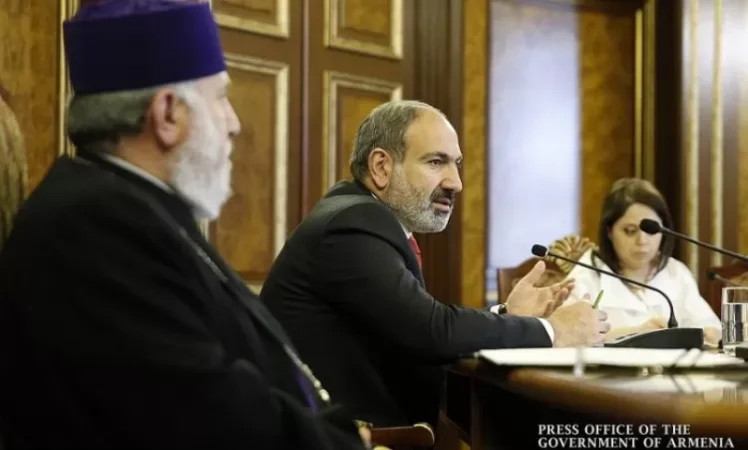
In the Government, under the chairmanship of Prime Minister Nikol Pashinyan and His Holiness Karekin II, Supreme Patriarch and Catholicos of All Armenians, the first meeting of the working group concerning the relations between the Republic of Armenia and the Armenian Apostolic Holy Church took place.
According to the government's press service, in his speech, Prime Minister Pashinyan particularly noted:
“Your Holiness,
Spiritual Fathers,
Esteemed Representatives of the Government,
I am pleased with our meeting today and consider it very important. As a result of discussions with the Supreme Patriarch, we concluded that it is necessary to establish a working group dedicated to addressing issues related to the interrelations between the Government of the Republic of Armenia and the Armenian Apostolic Holy Church, so that we have a continuously operating framework to discuss and resolve emerging issues. Moreover, it is desirable that these solutions are not merely piecemeal and immediate but rather institutional and long-term overall. In this regard, I believe it is extremely important to align our perceptions of church-state relations against the backdrop of the new situation that currently exists in the Republic of Armenia. Of course, there’s no need to mention the enormous importance and role that the Armenian Apostolic Holy Church has for us. I want to say that one of the key points of the ruling political force— the 'My Step' alliance— is the issue of preserving our national identity, which has been a foundational part of our political force’s agenda since 2013. Certainly, this is a paramount priority for us, and in this regard, the role of the Armenian Apostolic Church is distinctive and has always been special. But there is also the issue of understanding how much our perceptions are identical in terms of preserving identity, and what questions there are in this context that we need to discuss.”
The Prime Minister emphasized the importance of discussing issues in-depth to make the work of the working group effective and to understand them in their entirety. “It is necessary to arrive at joint decisions, taking our national and state interests as the starting point, and the issues we have posed today. We should strive to understand each situation in the present and listen to all arguments, leaving the decision-making space entirely to the arguments, meaning we must move away from arbitrary decisions and make clear substantiated decisions. Specifically, regarding education, the issue on our agenda proposed by the Mother See is related to the history of the Armenian Apostolic Church. Here, the first question that arises is: do we differentiate the history of the Armenian Apostolic Church from the history of the Armenian people, and if we do, why and how are we differentiating?”
“The next group of issues relates to tax relations. For example, there is a problem associated with real estate and property tax, and we need to understand what our approach is here. Is the property belonging to the Armenian Apostolic Church unified in this regard, or is it segmented, and should we apply differentiated or general approaches to those segments? During discussions with the Supreme Patriarch, I have had several occasions to touch upon this topic. Especially when we are currently carrying out an extensive campaign calling on citizens to pay taxes, because the paid taxes are what form and allow for the volume of work the government can do. We must clearly state here that we also need the support of the Armenian Apostolic Church to root this perception of the state more deeply in our reality.”
“And, thank God, today our call is receiving a certain response. I have stated that this year, the revenue part of the state budget will exceed expectations by at least 40 billion dram, which will provide the opportunity to raise salaries for military personnel and teachers and implement serious capital expenditures in various sectors. And I believe this logic should be continued. Of course, initially, 40 billion is a very good figure and, so to speak, out of the ordinary regime, but that 40 billion is, of course, not a figure that should satisfy us. We must take very serious steps in this area as well, and in this regard, we must discuss these issues.”
Noting that we agree to discuss all issues openly within the framework of arguments, I want to emphasize again that for me, the role of the Armenian Apostolic Church in the Republic of Armenia and in the Armenian community at large is not only important, but I also regard the rooting of Christian values in the Republic of Armenia as very significant. And I dare say that the non-violent, velvet, popular revolution that took place in Armenia was largely based on Christian values. And for myself, as a human being, as a political figure, I regard the moment when I had the opportunity to read and reread the New Testament as a turning point in my life. I believe that the doctrine contained there is indeed revolutionary in all respects, including from a state perspective, and it is the formula that can bring happiness to the Republic of Armenia, its citizens, and humanity in general.”
“I say this to state my attitude towards the church, my attitude towards Christianity, and my attitude towards Christian values. And I am convinced that these Christian values can serve and must serve the strengthening of the Republic of Armenia and the Armenian people.”
Your Holiness, I want to reiterate that I am pleased with today's meeting. I do not know if there has been a framework like this before, but I am sure it is an important milestone for us, because there indeed must be structural and procedural solutions to questions so that each issue has its clear answer and each decision has its clear explanation without gray areas. Therefore, I wish success to the working group. Of course, we will also discuss the outcomes and raised issues of the working group from time to time during our periodic meetings, but I hope to hear more about solutions than newly emerged problems as a result of the working group's activity.
Thank you.”
In turn, the Catholicos of All Armenians stated, “We welcome and extend our blessings to you. We express our joy at the convening of the first session of the working group aimed at improving church-state relations.
This new format of regulating the relationship between our homeland and our Church provides a fitting opportunity to discuss issues of mutual interest and seek pathways to their solutions for the enhancement of our Church’s mission for the sake of our country and people.”
His Holiness addressed church-state relations in his speech and emphasized the importance of cooperation, dictated by our national interests and priorities, with the imperative of preserving national identity, spirit, and character.
“There are positive expectations associated with the activities of this working group both among the clergy and within the community of our faithful people. We are confident that the expansion of church-state cooperation will contribute to the strengthening of our people’s national and spiritual life, the formation of a conscious and law-abiding citizen, the stability of families, the brilliance of the church, and the might of the state.
Our prayer is that the Lord grant well-being and prosperity to our homeland under the peaceful heavens and bless all efforts of our people and native authorities for the advancement of our homeland and the bright and prosperous future of our national life,” stated the Catholicos of All Armenians.
Նմանատիպ հոդվածներ


Ավելին Society բաժնից
Վանաձորում տղամարդու դի է հայտնաբերվել, նախնական տվյալներով՝ կենդանու կողմից հոշոտված
Բեռնատարը մկրատաձև դիրք է ընդունել. արգելափակվել է մոտ 100 բեռնատար և 50 մարդատար ավտոմեքենա
Տիգրան Ավինյանը Հաղթանակ կամրջի վրա փրկել է տղամարդու կյանքը