Ensuring at least 7.5% Economic Growth: Araik Harutyunyan to Prime Minister Pashinyan

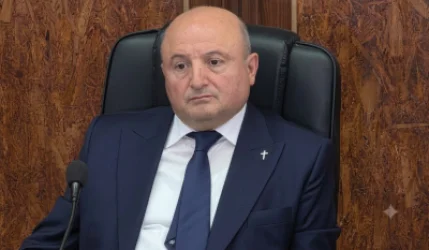
The President of the "Free Homeland" party, Araik Harutyunyan, has sent an open letter to the Prime Minister of Armenia, Nikol Pashinyan, through his Facebook page, presenting his proposals for the development of the Armenian economy.
Harutyunyan has described following these proposals as a bold step, while emphasizing that nearly all developed countries have chosen this path.
The full text of the letter is presented below.
"Dear Mr. Prime Minister,
Discussions taking place recently in the media and expert circles regarding the reduction of Armenia's total public debt, especially external debt, and particularly regarding the accumulation of debt at the expense of future generations, are considered unacceptable by me. I believe these approaches are pessimistic and do not take into account the possibilities and proven methods for economic growth, which could lead us to lag behind the pace of global economic development.
Our main challenge in this fateful period is to continuously ensure the necessary level of economic growth, which is also conditioned by the resolution of our socio-economic, security, and demographic issues.
What is the economic picture in Armenia currently, and what is the minimum threshold for economic growth that will ensure a level of accelerated development?
According to international expert sources, the global nominal GDP per capita currently stands at around $10,000, while in Armenia it is about $4,000. Based on this indicator, Armenia is not included among the top 100 countries in the world. Various expert assessments predict an average annual growth of 3% for the global economy in the coming years. This means that the global GDP per capita will increase by about $300 annually. To avoid lagging behind the global average, Armenia must also strive to achieve a minimum per capita GDP growth of at least $300 annually, which translates to ensuring at least a 7.5% economic growth. In fact, this is the minimum growth threshold that must be ensured at all costs if we do not want to fall further behind global development trends.
But how can such growth rates be achieved? There is only one way - investments. Our calculations show that if today, based on the current GDP, Armenia needs an annual investment of about $4 billion, then, in 5-7 years, the investment demand will rise to $7-8 billion per year.
In our opinion, direct investments alone will not be enough to ensure these volumes. Therefore, it is necessary to attract financial resources through state and other channels. Here, the focus is mainly on attracting borrowed funds.
The proposal to take on debt may seem strange at first glance, but analyzing the global trends in the sector allows us to confirm the validity of this approach. Currently, the total global debt is about $250 trillion, which is 318% of global GDP, or $33,300 per capita. In 2007, it was $142 trillion (269% of GDP), and in 2015, it was $199 trillion (286%). Over the last 10-11 years, it has increased by $108 trillion, or about 50% relative to GDP. In contrast, when we compare these global figures with those of Armenia, the picture is significantly different. Armenia's total debt (including government, household, and commercial sector) is around $12-13 billion, with a per capita debt of about $4,000, which is approximately $29,000 less than the global average. While approximately $79 trillion of the global total of $250 trillion in debt constitutes government debt (or $10,000 per capita — around 100% of global GDP), Armenia's government debt is about $7 billion, or around 50% of GDP.
If the global government debt comprises about 32% of total debt, in Armenia it is nearly half. This means that we have a relatively low debt burden in other sectors.
For further analysis and conclusions, let’s consider the following sketch, where the quoted figures may have acceptable deviations.
The sketch shows that Armenia has low external and state debt, both in general, and per capita, and relative to GDP. Notably, Armenia's total debt is almost equal to its Gross Domestic Product. That is, the per capita GDP/total debt ratio is equal to 1/1. For comparison, the average global equivalent ratio is 3/1.
For example, Latvia’s GDP is $30.2 billion, or $18,500 per capita, while its external debt is $39.7 billion. Its population is 2 million. Lithuania’s GDP is $35 billion, or $18,900 per capita, with an external debt of $52 billion. Estonia’s GDP is $30.9 billion, or $23,600 per capita; with a population of just 1.3 million, its external debt stands at $27 billion (despite its lower public debt).
Thus, we can confidently assert that it is predominantly the countries with significant external and state financial obligations that are rich and developed (the pattern is nearly the same for other countries as well). Compared with these countries, Armenia has a very low debt burden, both per capita and relative to GDP.
US President Donald Trump announced during the electoral process his intention to reduce (up to zero) the US debt, yet within just two years increased the federal debt by $2 trillion. Meanwhile, China's recent years’ pace of overall debt (government, state and private companies, and household debt) growth cannot be explained by any accepted economic principles.
If we compare Armenia’s per capita government debt with the global average ($10,000 - $2,300 = $7,700), and multiply it by the population size, we find an added potential for public debt of around $22 billion to reach the global average. In addition to public debt, the total capacity for increasing the credit load stands at about $60 billion (3 million population x $20,000). The difference between the global average debt level and Armenia's overall debt is about $90 billion. This means that if we also account for the ongoing trend of rising global debt averages, over the next 10-15 years, over $100 billion in additional funds could be invested in Armenia's economy to reach the global mean.
Within just 10-12 years, based on $22 billion in additional public debt, Armenia's GDP could exceed $45 billion, with a per capita volume of $15,000.
Naturally, this raises questions regarding the servicing of the debt. Considering that each $1 of GDP generates more than $0.2 in tax revenue, and that the maximum annual servicing cost on $1 of debt is $0.07 (which I believe will be lower in the future), public debt service becomes less problematic (in other words, paying back 7 cents to earn 20 cents). Furthermore, this calculation does not include the multiplier effect of investing borrowed funds in the economy, which will subsequently ensure additional tax revenues for the state budget.
The next question is the justification of the program to ensure the investment's long-term and dynamic impact.
There is a clear rule: funds involved by the state should be directed solely toward increasing the elements of investment in fixed capital, while also making the volume of private sector lending manageable and controllable.
In this regard, deep and comprehensive research is necessary, but it is evident that significant investment potential exists in agriculture, infrastructure, construction, manufacturing, and other sectors. It should also be noted that alongside the increase in public debt, there will be a parallel growth in total debt, with a significant part of it also becoming investment. Especially if the public debt is primarily utilized for the development of productive infrastructure, it will create additional incentives for attracting investments.
This analysis attempts to break the stereotype that has formed regarding public debt and overall credit obligations. It is essential to understand that without the involvement of significant additional funds and large investment programs, it will be impossible to confront today’s challenges. The capabilities of the army and demographic growth are fundamentally based on high economic growth rates. And these cannot be ensured without ambitious and large-scale investments. Is there no alternative to taking on debt for solving these issues?
Annual growth rates of domestic savings are insufficient. Due to the low economic growth rates in Russia over recent years, our outflow of domestic capital has decreased, but that does not mean this situation can last indefinitely. Concerning foreign investments, the current state of the Armenian economy and the potential for direct investments cannot guarantee the desired economic growth rates.
Conservative (fearful) financiers always present two counterarguments regarding the increase of debt: "there’s no one to lend money" and "there are no justified programs." Responses to both counterarguments always exist: the possibilities for raising funds globally have significantly increased; one just has to find the right sources and negotiate effectively. Where to efficiently invest the involved resources can easily be solved through professional work and appropriate analyses.
In conclusion, I am convinced that not everyone will unequivocally accept this viewpoint, but I believe the subject deserves broad discussion among economists and should provide the new government of Armenia the courage to embark on this path. By the way, similar proposals have also been made by Academician Abel Aganbekyan to the current government of the Russian Federation. Having researched the global experience from numerous sources for a long time, drawing on a wealth of leading professional literature (for instance, Dzo Stadwelli’s "The Asian Management Model," Jeffrey Sachs' "The End of Poverty," Daron Acemoglu’s "Why Nations Fail," Gregory Clark’s "Farewell to Poverty," Paul Krugman’s "It Is Possible to Get Out of Crisis," Ruchir Sharma’s "The Rise and Fall of States," and so on), I am confident that the breakthrough development of Mother Armenia is possible only with the bold engagement of significant financial resources; otherwise, we are doomed..."
Araik Harutyunyan, former Prime Minister of the Artsakh Republic (2007-2017)
Նմանատիպ հոդվածներ
Ավելին Politics բաժնից
Ի՞նչ էր փորձում կանխել իշխանությունը Գյումրիում. «Փաստ»

Ինչ թանկարժեք նվեր է ստացել Թրամփը` ԱՄՆ-ի անկախության 250-ամյակի առթիվ

Ընդդիմադիր դաշինքները կանգնած են դժվարին որոշման առաջ. «Հրապարակ»